

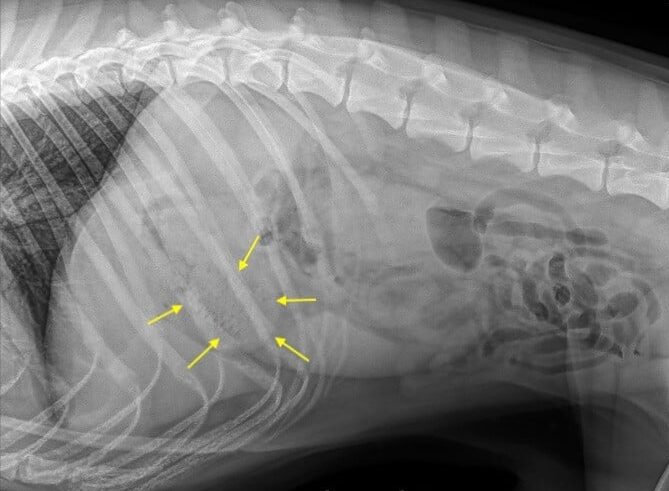
One of the most classic foreign bodies in small animal practice is the corn cob. Although owners often assume a cob is “natural” and therefore digestible, veterinary teams know otherwise. Corn cobs are among the most frequent causes of complete small intestinal obstruction in dogs, requiring emergency surgery and carrying the potential for intestinal perforation, septic peritonitis, and prolonged hospitalization.
Why are Corn Cobs so Dangerous?
Unlike many ingested foreign objects, corn cobs possess several characteristics that make spontaneous passage unlikely. Once free of kernels, the remaining fibrous cob is composed largely of cellulose and lignin, making it highly resistant to digestion. Once swallowed, the cob readily absorbs fluid and becomes larger and softer without breaking apart. Its cylindrical shape allows it to move through the stomach but frequently results in obstruction at narrower sections of the small intestine, particularly the jejunum or ileum.
Dogs often ingest corn cobs whole after gaining access to trash, compost bins, picnic leftovers, or barbecue waste. Labrador and golden retrievers, beagles, and other food-motivated breeds are common culprits, although any dog may be affected.
Clinical Presentation
Clinical signs depend on the degree and duration of obstruction but often develop within 24 to 72 hours after ingestion. Affected dogs commonly present with repeated vomiting, anorexia, lethargy, abdominal pain, and dehydration. As obstruction persists, vomiting becomes more frequent, electrolyte abnormalities worsen, and abdominal discomfort increases. Perforation and septic peritonitis dramatically worsen prognosis and may result in cardiovascular compromise, fever, hypotension, and signs of septic shock.
Differential Diagnoses
Eighty percent of GI obstruction in dogs is a result of the ingestion of foreign objects, with the rest due to intestinal intussusception or neoplasia. Corn cob obstruction is on the differential list for any dog presenting with suspected obstruction. Other common causes include:
- Linear foreign bodies (e.g., rope, towel, rug material)
- Fruit pits
- Bones
- Toys or balls
- Socks and other textiles
- Rocks
A complete history and advanced imaging can help distinguish these conditions before surgery.
Diagnostic Approach
A thorough history often provides the most valuable diagnostic clue. Owners may witness ingestion directly or report that corn cobs disappeared after a family cookout or outdoor gathering.
Because many foreign objects are poorly radiopaque, survey abdominal radiographs frequently reveal only indirect evidence of obstruction rather than the foreign body itself. Findings may include gastric distension, fluid-filled small intestinal loops, segmental intestinal dilation, or gas accumulation proximal to the obstruction. While not radiodense, corn cobs do have a classic reticulated pattern due to gas trapping along the cob and can often be identified on radiographs.


Abdominal ultrasonography by an experienced operator can provide confirmation of obstruction if radiographs are inconclusive. The cob, as with other obstructive objects, typically appears as a hyperechoic intraluminal structure with marked distal acoustic shadowing and associated intestinal distension. Ultrasound also allows clinicians to assess intestinal wall integrity, evaluate other organs, and check for evidence of perforation.
Laboratory abnormalities are nonspecific but may include dehydration, hemoconcentration, and electrolyte derangements.
Treatment: Surgery is Usually Required
Unlike some foreign bodies, corn cobs rarely successfully pass through the entire gastrointestinal tract without intervention. If the owner immediately recognizes ingestion and the cob remains within the stomach, the veterinarian may attempt to induce emesis. Endoscopic retrieval may be possible in appropriately selected patients when emesis is unsuccessful. However, once the foreign body causes obstruction of the small intestine, exploratory laparotomy is the treatment of choice.
During surgery, the surgeon must carefully evaluate the affected bowel for viability before removing the obstruction. A simple enterotomy is often sufficient when the intestine remains healthy. However, prolonged obstruction may compromise blood supply, necessitating intestinal resection and anastomosis. Clinicians should inspect the entire gastrointestinal tract for additional foreign material before closure, particularly in dogs with a history of dietary indiscretion.
Postoperative Care
Successful recovery depends on more than surgical removal of the obstruction. Patients require aggressive fluid therapy, multimodal analgesia, antiemetic therapy, nutritional support, and close monitoring for postoperative complications.Veterinary technicians play a critical role during recovery by monitoring pain scores, maintaining intravenous infusions, tracking gastrointestinal function, encouraging early nutritional intake, and educating owners about postoperative care.
Most uncomplicated enterotomies carry an excellent prognosis, while intestinal resection, delayed presentation, or septic peritonitis significantly increase morbidity and mortality.
Client Education: Prevention Starts at Home
Corn cob foreign bodies are largely preventable, making client education one of the most valuable aspects of these cases.Owners frequently underestimate the danger because some owners feed corn as a treat without issue. It is important to explain that it is the cob, not the kernels, that is the problem. Advise clients to dispose of corn cobs immediately after meals, secure trash containers, and keep compost piles inaccessible to pets. Backyard barbecues, picnics, and holiday gatherings create ideal opportunities for accidental ingestion, particularly in food-motivated breeds.
Owners should also understand that waiting for the cob to “pass on its own” can significantly worsen prognosis. Dogs that vomit repeatedly after known or suspected ingestion strongly benefit from immediate veterinary evaluation before intestinal compromise develops.
Veterinary Teams can Help Prevent this Common Surgical Emergency
Veterinarians and veterinary technicians play an important role in helping owners understand that corn cobs are far more than a harmless table scrap. Through client education, early recognition of intestinal obstruction, and prompt surgical intervention when needed, veterinary teams can help prevent serious complications and improve outcomes for dogs affected by this common but preventable emergency.
More from Zuku Learning:
- Earn live and on-demand RACE-approved CE.
- Explore NAVLE®, BCSE, and VTNE® prep.
- Subscribe to the Question of the Day to receive a NAVLE®, BCSE, or VTNE®-format question delivered to your inbox daily.
- Review the weekly Veterinary Medicine Blog.


