


Thanksgiving brings family gatherings, festive meals, and an increased risk of preventable veterinary emergencies. From pancreatitis after a fatty meal to gastrointestinal obstruction due to discarded turkey bones, holiday celebrations can expose pets to serious health hazards.
For veterinary students and professionals, this season offers an opportunity to review common toxicities, emergency triage, and clinical decision-making. Understanding these four seasonal veterinary emergencies can help veterinary teams recognize clinical signs, prioritize diagnostics, and initiate timely treatment.
1. Pancreatitis: Fatty Foods Leading to Acute Inflammation
Fat-rich holiday foods, including turkey skin, gravy, butter, and meat drippings, can contribute to gastrointestinal upset and may trigger acute pancreatitis in susceptible dogs. Pancreatitis develops when pancreatic inflammation damages surrounding tissues and disrupts normal digestive function. Common clinical signs include vomiting, anorexia, abdominal pain, lethargy, dehydration, and diarrhea.
Consider the patient’s history and physical examination findings and perform a CBC, chemistry panel, pancreatic lipase testing, and abdominal imaging to guide diagnosis. Treatment centers on fluid therapy, analgesia, antiemetics, and appropriate nutritional support. Severe cases require hospitalization and close monitoring. A newly available targeted anti-inflammatory therapy (leukocyte function-associated antigen 1 activation inhibitor) shows promise.
2. Gastrointestinal Obstruction: Turkey Bones and Corn Cobs
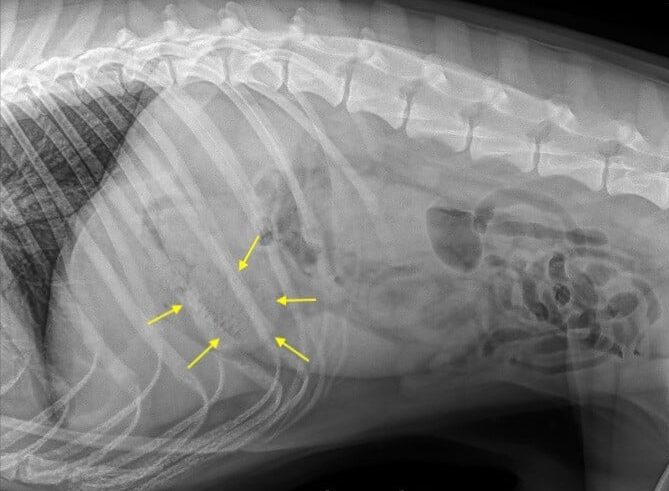
Holiday meals create opportunities for pets to ingest bones, corn cobs, food wrappers, and other foreign material. Cooked turkey bones can fracture into sharp fragments and cause gastrointestinal trauma. Corn cobs can lodge within the gastrointestinal tract and cause mechanical obstruction. Clinical signs may include persistent vomiting, abdominal pain, anorexia, and lethargy.
Veterinary teams typically use abdominal radiographs or ultrasonography to identify an obstruction. Depending on the object’s location and the patient’s condition, treatment may require endoscopic retrieval or exploratory laparotomy.
3. Onion and Garlic Toxicity: Oxidative Hemolytic Anemia
Stuffing, casseroles, gravy, and seasoned meats often contain onions or garlic. These Allium species contain compounds that cause oxidative damage to erythrocytes, potentially producing Heinz body hemolytic anemia. Cats demonstrate particularly high susceptibility, although dogs also face significant risk.
Clinical signs include weakness, pale mucous membranes, tachycardia, icterus, and hemoglobinuria. Signs usually begin several days post-ingestion (i.e., once enough hemolysis has occurred), although they may appear as soon as 24 hours with very large exposures. Patients may have a single large toxic dose or chronic exposure with small amounts. Veterinarians might recommend serial PCV measurements and blood smear evaluations post-exposure.
Treatment focuses on decontamination when caught immediately. Blood transfusions and ongoing supportive care are indicated for clinically affected animals. Additionally, monitor for hemoglobinuria-associated renal injury.
4. Acute Hemorrhagic Diarrhea Syndrome: Severely Bloody Stool
When dogs are fed holiday foods or access spoiled leftovers, the most common sequelum is GI upset. One of the most severe manifestations can be acute hemorrhagic diarrhea syndrome (AHDS, formerly called hemorrhagic gastroenteritis). AHDS is characterized by acute bloody diarrhea and usually accompanied by nausea, inappetence, dehydration, and lethargy. While the exact etiology is not known, AHDS is more common in the winter months and in dogs with historic intestinal illness.
Diagnosis requires the clinician to rule out other causes of acute hemorrhagic diarrhea such as parvoviral enteritis, GI parasites, pancreatitis, anaphylaxis, hypoadrenocorticism, and foreign material. Hematocrit is often severely elevated and other tests such as radiographs, chemistry, and even abdominal ultrasound, usually show no specific changes.
Treatment depends on the severity of signs and focuses on rehydration, antiemetics, and nutritional support. Very severe cases can develop hypovolemic shock and are at risk of sepsis. Newer guidelines recommend considering antibiotics only in cases with concern for severe systemic illness and sepsis.
Thanksgiving Emergency Triage: What Veterinary Teams Should Prioritize
Effective emergency management begins with rapid assessment and clear communication. Veterinary technicians and veterinarians should work together to:
- Immediately assess stability.
- Initiate stabilization if indicated.
- Obtain a detailed ingestion history and exposure timeline.
- Identify potentially toxic ingredients and estimate doses.
- Perform appropriate point-of-care diagnostics.
- Provide ongoing care and monitoring specific to the diagnosis.
Early recognition and coordinated care can improve patient outcomes.
Turn Holiday Emergencies into Success Stories
Thanksgiving veterinary emergencies reinforce essential concepts in toxicology, gastroenterology, and emergency medicine.
For veterinary students preparing for the NAVLE® and veterinary technician students preparing for the VTNE®, these cases provide valuable opportunities to connect pathophysiology with practical clinical decision-making. Practicing veterinarians and veterinary technicians can apply the same principles to strengthen triage, choose appropriate diagnostics, create an effective care plan, and educate clients.
From recognizing signs during initial presentation to making critical treatment decisions, preparedness remains one of the most powerful tools in veterinary medicine.
More from Zuku Learning:
- Sharpen your knowledge on foreign bodies. Review Corn Cob Foreign Bodies in Dogs: A Common Surgical Emergency.
- Shop the Zuku Review Black Friday Sale: Double Access on NAVLE® + a free year of ZukuCE for Vets | 15% Off VTNE® + one free year of ZukuCE for Vet Techs | 10% Off BCSE.
- In need of CE before your state’s renewal deadline? Earn live and on-demand RACE-approved CE with ZukuCE.


